All eyes on Europe
Originally published on LinkedIn
James Hochreutiner
4/3/20234 min read


As countries around the world face a year of economic rightsizing, all eyes are on Europe, where energy shortages, underperforming GDP, and high inflation have combined to create an unpredictable market. Yet, despite fundamental challenges in the economy, labour markets remain stubbornly strong with job vacancies outnumbering job seekers in many places.
As a single source for comprehensive workforce solutions, AgileOne is positioned to help companies succeed in any economy. That is why we are pleased to present Workforce Solutions Market Overview: March 2023 Edition. This report combines the latest economic data and insights from around the world with leading solutions to help companies navigate the ups, downs, and in-betweens of today’s complex, changing marketplace.
Underlying challenges
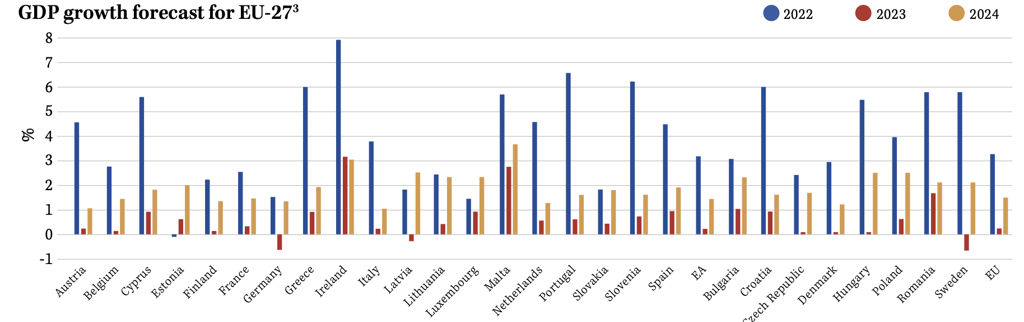
Europe enters 2023 held back by high prices, weakened consumer confidence, ongoing supply chain issues, and tighter monetary policy. According to estimates by the IMF, annual growth in the euro area in 2023 is projected to be 0.7 percent, after 3.5 percent in 2022. Meanwhile, an ongoing energy crisis — a result of Russia’s war in Ukraine — will continue to impact global energy prices, potentially forcing European policymakers to ration supplies of fuel if demand picks up. Although the price of natural gas fell over the final quarter of last year, the unpredictable nature of the economy could lead to GDP growth that is below its potential and prices that are higher than in other regions of the world.
Among European nations, the UK and Germany are projected to experience the biggest slowdown in growth — partly the product of a labour market in which workers are harder to come by. In the UK, the impact of Brexit on the supply of workers, along with the high incidence of long-term sickness among workers, threatens to further tighten the labour market, pushing wages and inflation even higher. Meanwhile, Germany’s growth potential will continue to be limited by its aging population: by 2030, the country will employ more 65-year-olds than under-20-year-olds.
How the European economy ultimately performs in 2023 depends on how effectively policymakers can navigate supply and demand imbalances, manage growth, and slow inflation. But unlike in other regions, they face solutions that are far narrower in scope as a result of political and economic challenges that hit closer to home.
Implications for European employers
European employers should expect the duelling challenges of a tight labour market and high inflation to create ongoing pressure on efforts to hire and retain workers. Therefore, companies must demonstrate continued flexibility to meet the evolving needs of a complex workforce.
In the UK, which recorded more than one million vacancies at the end of 2022, competition for quality workers remains near an all-time high. The same goes for Germany, where the labour force is still coming up short of the nearly 800,000 people needed to fill all of its job vacancies, despite entering the year with roughly 45.6 million persons in employment — the highest number since reunification in 1990. Employers in both markets and throughout Europe should actively pursue workforce solutions that offer alternatives to traditional worker arrangements, such as hiring contingent (or temporary) staff and “hidden” workers that are often overlooked in typical hiring processes.
Meanwhile, as high inflation across Europe continues to squeeze real wages and impact bottom lines, employers should think creatively about ways to retain quality workers. This begins with creating a culture that places people first and responds to changing expectations for when — and where — employees conduct work. Toxic culture is 10.4 times more likely to contribute to attrition than even compensation. In an era of quiet quitting, companies are wise to take a human-centred approach, embracing tried and true strategies like flexible working arrangements and opportunities for learning and career advancement.
In rapidly changing times, AgileOne is at your side. We are the one workforce solutions provider to offer comprehensive solutions leveraging the best of the best, combined with our technology expertise, consulting services, and exceptional delivery teams to meet all your talent attraction and management needs.
Here are five solutions we’re recommending for companies of any size or scope to navigate today’s evolving labour market:
Hire flexibly with contingent labour. In times of transition, contingent labour provides companies with the flexibility to adjust to reduced demand during economic contractions while allowing them to quickly scale up during recovery.
Streamline with total talent solutions. AgileOne's total talent management solutions offer a strategic approach to managing all categories of workers with a singular model supportive of an organization's workforce fulfilment needs. This allows companies to streamline their operations and weather any conditions.
Diversify your workforce. Employers who hire non-traditional candidates — or "hidden workers" — benefit from a larger and more diverse talent pool. Furthermore, women and minorities in leadership positions have been shown to outperform their peers on profitability, strengthening the business case.
Build the ultimate worker pipeline. By leveraging talent communities — or groups of interested candidates who are not yet ready to commit — companies can focus on building a pipeline of quality workers until the right time for both parties.
Double down on culture. In an era of historic labour market tightness, companies that prioritize a human-centred approach will be in a stronger position to retain employees. Proven strategies that improve company culture include embracing flexible working arrangements and supporting opportunities for learning and career advancement.
Original Post: https://www.linkedin.com/pulse/all-eyes-europe-james-hochreutiner/
Reach out for tailored support across services procurement, external workforce strategies, workflow optimisation and SaaS evaluation.
© 2026. All rights reserved.
